
Focus Areas
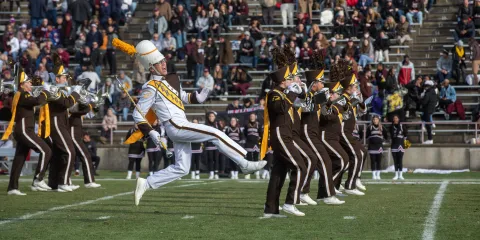
Bands
The "Band" tradition encompasses a wide spectrum of wind, brass, and percussion music—from the precision of the wind ensemble to the high-energy pageantry of the marching field. It focuses on rhythmic clarity, powerful sonority, and a versatile approach to diverse musical genres. Our band program is a cornerstone of campus life, spanning the historic Marching 97 to our premier Wind Ensemble. We provide a high-energy home for every instrumentalist, balancing the storied traditions of the stadium with the sophisticated musicianship of the modern concert hall.
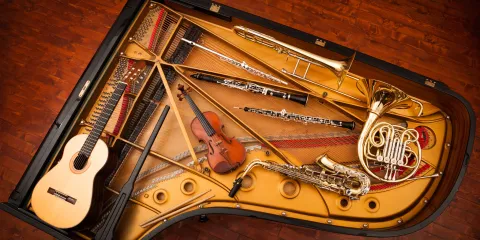
Chamber Music
Chamber music is music composed for a small group of instruments—traditionally one performer to a part—without a conductor. This is the ultimate exercise in leadership and collaboration. Every student is equally responsible for the tempo, phrasing, and artistic direction, making it the most intimate and challenging form of musical conversation.
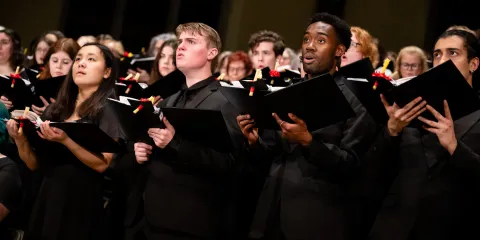
Choral
Choral music is the art of ensemble singing, ranging from intimate chamber groups to large symphonic choirs. It is a discipline that combines vocal technique, linguistic study, and the unique "social practice" of harmonizing with others to express a shared text. Since 1869, Lehigh Choral Arts has served as a premier collective for "thinker-singers" across all academic fields. Through international tours and performances at the Zoellner Arts Center, our choirs investigate the score as a living history while building a lifelong sense of community.
Composition
Composition is the art of creating original musical works. It involves structural planning, instrumental knowledge, and creative iteration. Composition is a hands-on lab. Students work across genres—from traditional orchestral writing to electronic sound design—learning to take an initial spark of an idea and refine it into a finished, performable artifact.
Jazz
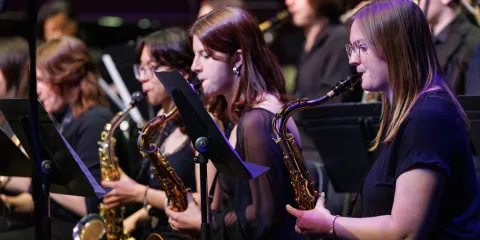
Jazz is a uniquely American art form rooted in blues, swing, and improvisation. It requires a deep understanding of harmonic language and the ability to compose in real-time. Our program focuses on "Improvisation as Innovation." You’ll study the historic grammar of the greats while learning to take creative risks, developing a musical "fluency" that allows you to converse with other musicians on stage.
Keyboard Studies
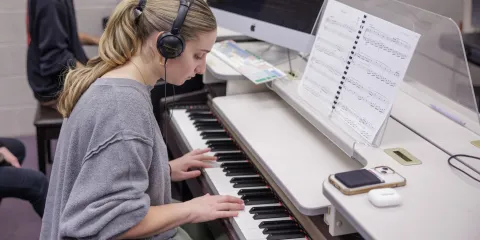
Keyboard studies encompasses the technical and artistic mastery of the piano, harpsichord, synthesizer, and organ, instruments that serve as the fundamental "workstations" for all musical study. This area bridges the gap between private artistry and collaborative performance. With access to our Steinway Spirio Concert Grand, students explore everything from solo virtuosity to the essential skills needed for accompaniment and composition.
Music History
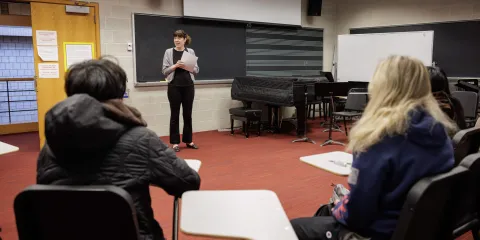
Musicology is the scholarly study of music as a human phenomenon. It goes beyond names and dates to explore the "why" behind the sound. We examine how music functions as a social practice. You’ll learn to trace how Baroque dance forms influenced European politics or how Jazz became a tool for cultural resistance, developing the analytical rigor to see art as a mirror of history.
Music Theory
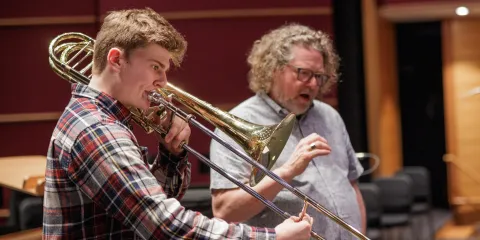
Music Theory is the study of the "grammar" and architecture of sound. It provides the vocabulary to describe how melody, harmony, and rhythm interact. We treat Theory as a toolkit for creators. Whether you are decoding a Bach fugue or analyzing the production of a modern pop track, you are learning the technical precision that allows you to communicate musical ideas with intention.
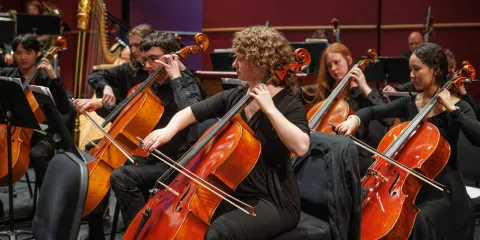
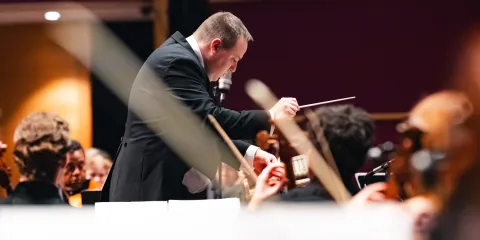
Orchestra
Orchestral music is the study and performance of large-scale instrumental works, typically led by a conductor. It requires a high degree of technical precision, a deep understanding of historical style, and the ability to blend a single instrumental voice into a massive, unified sound. The Lehigh University Philharmonic serves as a laboratory for symphonic discovery in the world-class Baker Hall. Our orchestra brings together students from all majors to tackle the masterworks of the repertoire, blending rigorous individual preparation with the power of professional-grade collective artistry.